FrameMaker Knowledge Hub
• 22 Apr 2026
• 8 views
A detailed guide to navigating the first year of college through routine, relationships, help-seeking, campus engagement, and better academic adjustment.
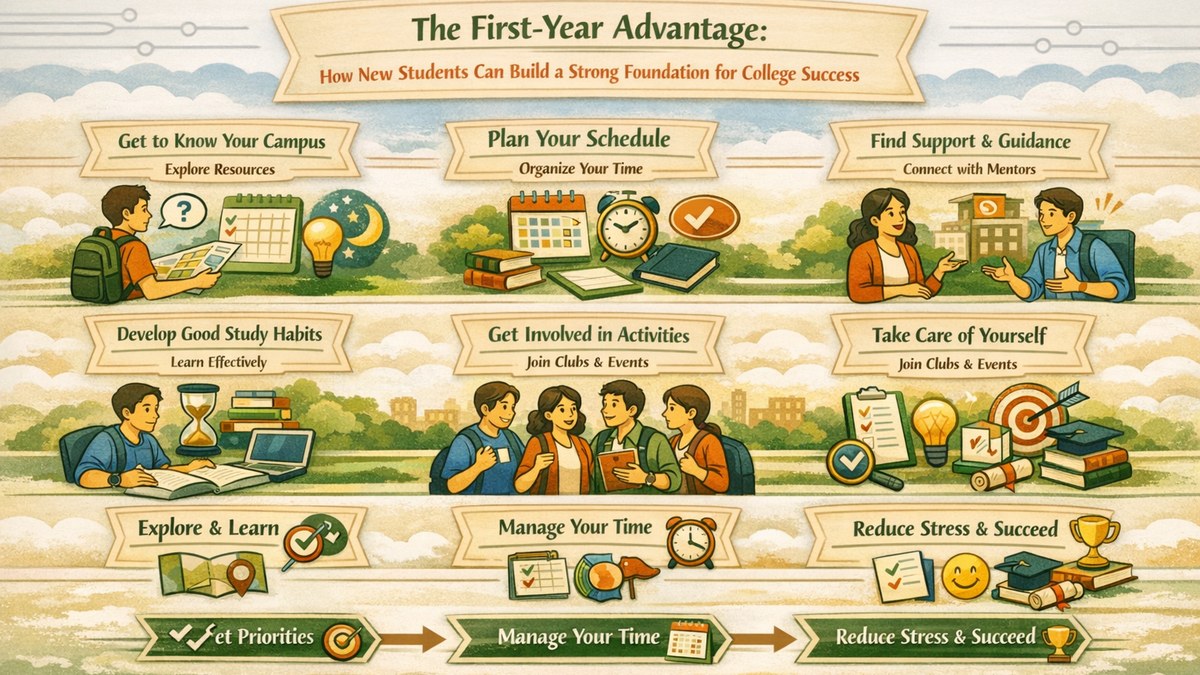
The First-Year Advantage: How New Students Can Build a Strong Foundation for College Success
The first year of college is often described as exciting, but it is also one of the most delicate phases in a student's journey. Expectations are high, routines are unstable, and many students are trying to understand a new academic culture while also managing emotional, social, and practical changes. Some move into hostels, some commute long distances, some adjust to English-medium instruction, some begin handling money independently, and many are encountering a more self-directed learning environment than they have ever faced before.
Because of this, the first year should not be treated as a warm-up period with low strategic importance. It is the year in which students form habits that shape everything that follows. Their relationship to attendance, assignment planning, help-seeking, peer connection, faculty engagement, and self-belief often takes root here. A difficult first year does not automatically lead to failure, but a supported first year can dramatically increase the chances of persistence and success.
Why the First Year Is So Important
Students often assume that success in college depends only on intelligence or effort. In reality, transition matters. Many capable students underperform early not because they lack potential, but because the rules of the environment have changed. Teachers may expect independent reading before class. Deadlines may cluster unexpectedly. There may be less direct supervision and more silent assumptions about how students should behave.
For first-year students, confusion itself can become a burden. They may not know:
- how to organize a weekly study schedule,
- how much time a credit-bearing course actually requires,
- how to prepare for university-style exams,
- when to email a faculty member,
- how to use academic support services, or
- how to balance social opportunities with personal discipline.
This is why the first year should be approached intentionally. Students who stabilize early gain an enormous advantage in confidence and momentum.
The Myth of “I Will Figure It Out Later”
One of the most common mistakes in the first semester is postponing structure. Students tell themselves they will become organized after the first internal test, after they make friends, after the festival season, or after they understand the syllabus better. Unfortunately, delay can quickly turn into drift.
When routines are absent, assignments become urgent, sleep becomes irregular, attendance slips, and stress rises. Once this happens, students often begin to feel guilty, and guilt can reduce motivation further. The result is not only weak performance but also an unnecessary loss of self-confidence.
It is better to create a modest routine early than to wait for a perfect system later.
Five Foundations for a Strong First Year
1. Academic routine
Students should begin with a simple weekly structure: class hours, revision blocks, reading time, assignment time, and one catch-up slot. The goal is not rigid perfection but consistency. Even two focused study hours a day can outperform long, irregular, panic-driven sessions.
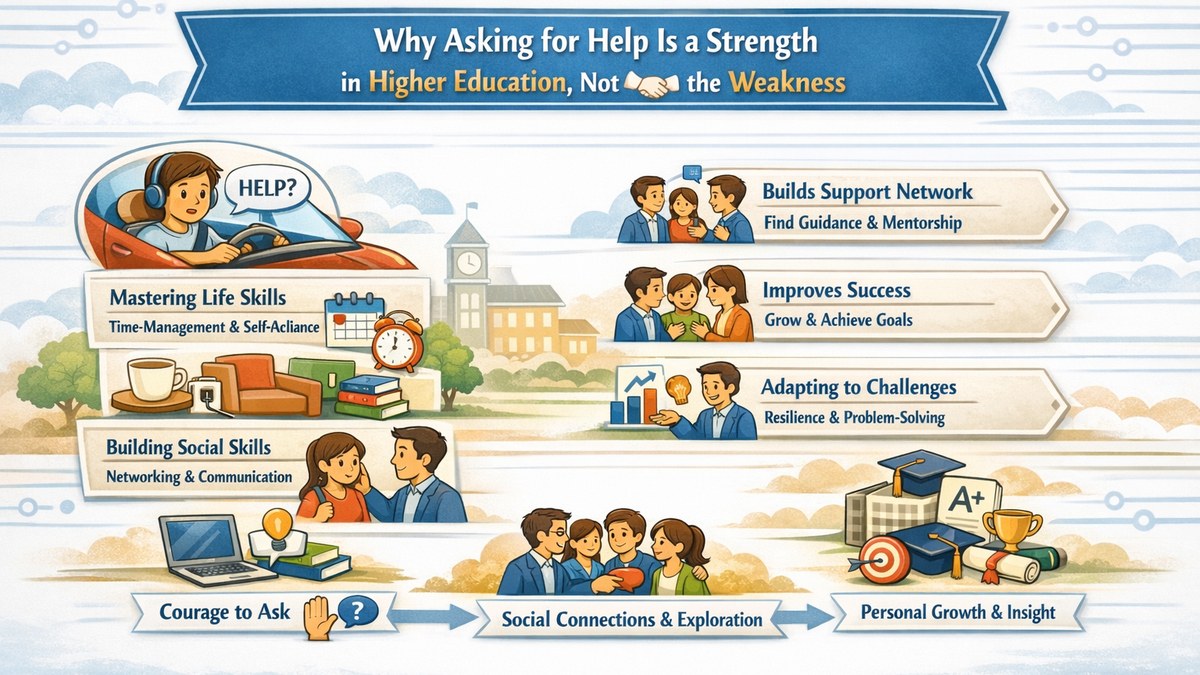
2. Help-seeking without shame
Strong students ask questions early. They do not assume that confusion is a private weakness. Meeting an advisor, clarifying a concept with a teacher, joining a study group, or attending a writing or language support session are all signs of academic maturity.
3. A small support network
Students adjust better when they know at least a few people they can rely on. This does not require becoming highly social. One classmate for notes, one friend for accountability, one senior for guidance, and one staff contact for institutional questions can make a major difference.
4. Time realism
University work often takes longer than expected. A student who budgets only visible class hours will remain underprepared. Reading, revision, project work, presentations, lab preparation, travel, and administrative tasks all consume time.
5. Campus participation
Students do better when they connect to the institution beyond the classroom. Clubs, events, competitions, mentoring programs, and volunteering opportunities help transform a campus from a place of obligation into a place of identity.
How to Manage the Transition Without Feeling Overwhelmed
Transition becomes easier when it is broken into manageable tasks rather than treated as one giant emotional event. New students can focus on a few practical steps:
- understand the academic calendar fully,
- note all major deadlines immediately,
- find key offices in the first two weeks,
- save the contact details of course coordinators or advisors,
- learn how the library and digital learning systems work, and
- attend at least one campus activity outside regular class.
Students often underestimate how much reassurance comes from simply knowing where to go and whom to contact. Clarity reduces anxiety.
The Role of Faculty and Peer Support
First-year success is not a student-only responsibility. Faculty members, advisors, seniors, and student affairs teams all shape how manageable the transition feels. Simple actions such as explaining expectations clearly, inviting questions, giving actionable feedback, and encouraging participation can reduce the psychological distance that first-year students feel.
Peer mentoring is particularly valuable. New students often ask peers the questions they hesitate to ask staff: How hard is this course really? How should I prepare? What matters most? Where do students usually struggle? Good peer mentors convert hidden institutional knowledge into accessible guidance.
What First-Year Students Should Avoid
- Comparing constantly: Some students look settled very quickly. That does not mean everyone else is failing.
- Ignoring attendance early: Missing classes in the opening weeks makes later recovery harder.
- Confusing busyness with productivity: Being on campus all day is not the same as studying effectively.
- Depending only on last-minute preparation: This may work briefly but usually damages retention and confidence.
- Staying invisible: Total silence can make support harder to access when it is needed most.
The Emotional Side of First-Year Success
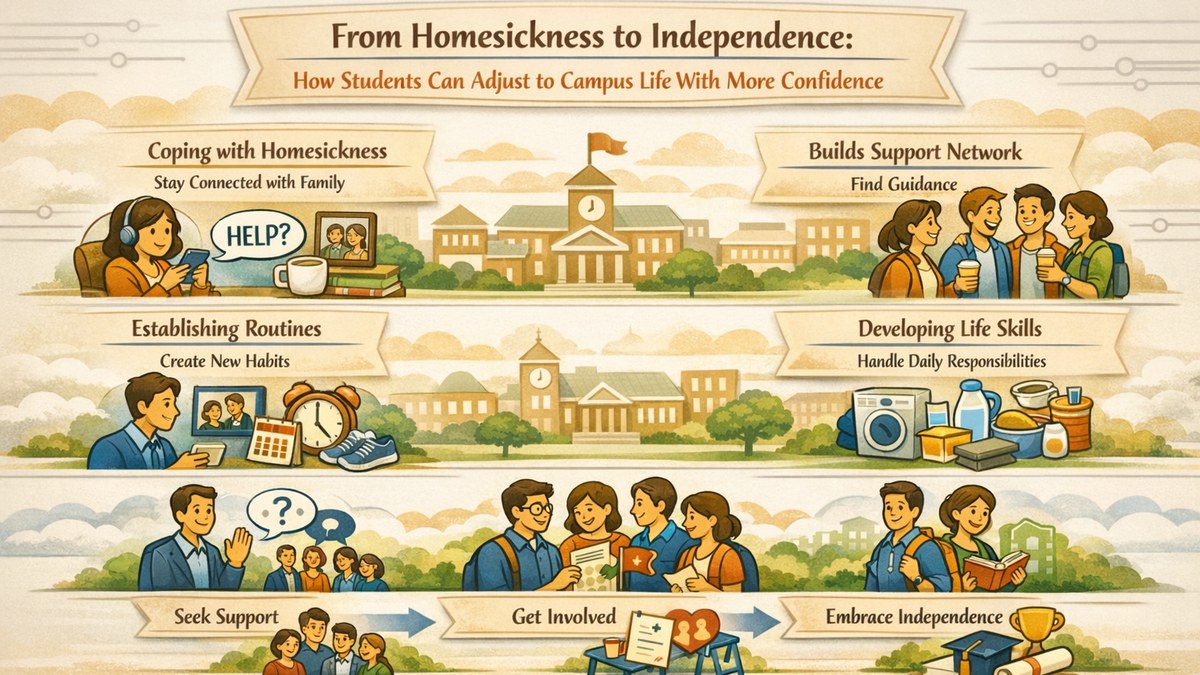
It is normal for students to feel uncertain, lonely, or homesick during transition. A difficult first month does not mean a student has chosen the wrong course or is incapable of succeeding. Adjustment is rarely linear. Some students flourish socially but struggle academically. Others manage coursework well but feel disconnected. Some take a full semester to feel settled.
What matters is not whether the first year feels easy, but whether students build the tools to navigate challenge. Resilience in higher education grows when students combine self-awareness with action: they notice difficulty, seek support, adapt routines, and stay engaged rather than withdrawing.
The First Year as a Launchpad
Students often think success begins in the second or third year, when internships, electives, or specialization become more visible. Yet the truth is that these later opportunities are built on first-year habits. Good attendance, stable routines, faculty trust, peer support, and campus familiarity create momentum that compounds over time.
A strong first year does not require perfection. It requires intention. Students do not need to master every system immediately, but they do need to begin building a structure that supports learning and belonging. That structure becomes the launchpad for everything that follows.
In that sense, the first year is not merely an introduction to college. It is the stage on which students begin to practice the attitudes that will define their university life: responsibility, curiosity, connection, and the courage to ask for help before difficulty becomes crisis.
References
- Linden, K. Wide Transition Framework to Improve First-Year Success.
- Maymon, R. et al. Supporting First-Year Students During the Transition to Postsecondary Education.
- Stokoe, M. First Year Students' Perceptions of the Transition to University.
- NSSE. Evidence-Based Improvement in Higher Education.
- AAC&U. High-Impact Practices and Student Success.