FrameMaker Team
• 15 Apr 2026
• 2 views
Cyber resilience improves when organizations build a broader security culture. Awareness, structured learning, and certification pathways help make cyber responsibility more widely shared and more reliable.
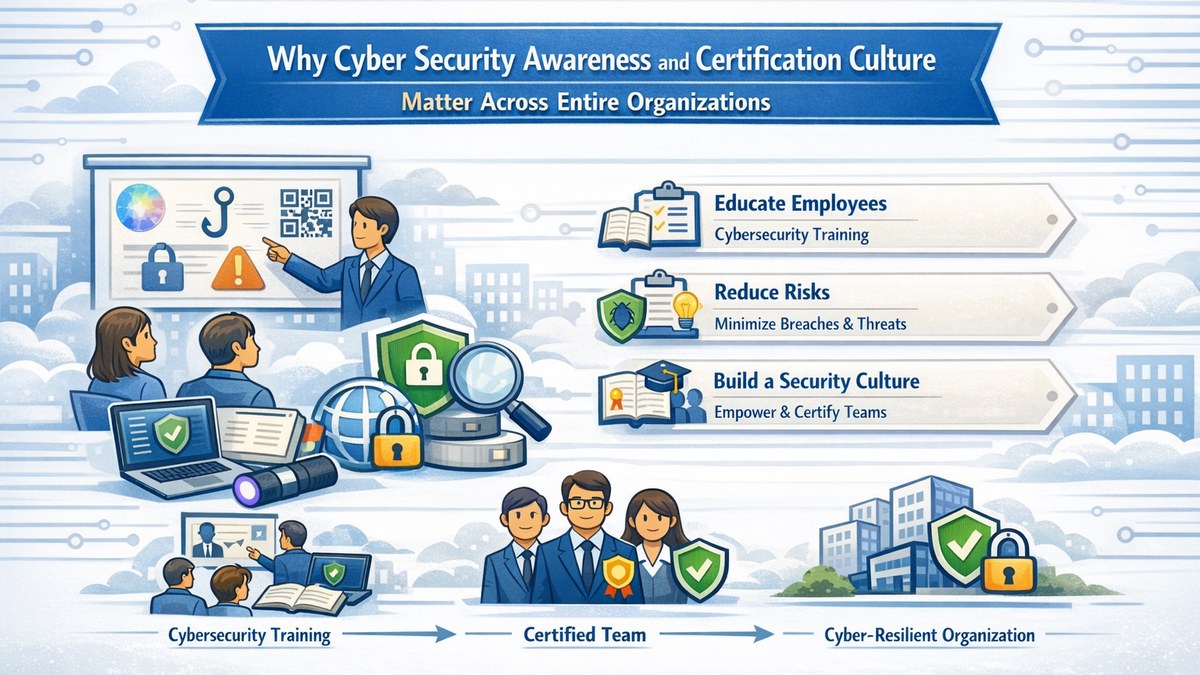
Why Cyber Security Awareness and Certification Culture Matter Across Entire Organizations
Cyber security is often discussed as if it belongs only to specialists. In reality, most security outcomes depend on a much wider range of people. Leaders approve systems and policies. Administrators manage records. Staff handle email and attachments. HR teams manage onboarding and access changes. Finance teams handle sensitive workflows. Vendors connect into systems. Students, employees, and customers interact with digital platforms every day. Because of this, cyber resilience is not produced only by a security department. It is produced by an organizational culture in which secure behavior is taken seriously.
This is where awareness and certification culture become important. Awareness alone can be too shallow if it remains limited to occasional reminders. Certification alone can be too narrow if it is confined to a small technical group. But together, structured learning and broader awareness can help organizations move from reactive security behavior to a more stable and professional security culture.
In practical terms, this means that security should be treated not only as a control function but as a shared organizational discipline. Some roles need deep technical expertise. Others need strong awareness and role-specific responsibility. A thoughtful culture recognizes both needs and builds development pathways accordingly.
Why Security Culture Matters
Many cyber incidents are not caused solely by advanced technical compromise. They are often worsened by ordinary weaknesses: careless handling of links, weak access habits, poor change management, delayed reporting, undocumented exceptions, or overreliance on convenience. These are cultural as much as technical issues. They reflect how seriously people take secure behavior in day-to-day work.
A strong security culture makes good behavior more normal. It encourages verification before trust, documentation before assumption, and escalation before silence. It reduces the distance between security policy and everyday action. This does not happen automatically. It must be built intentionally through communication, leadership example, process design, and structured learning.
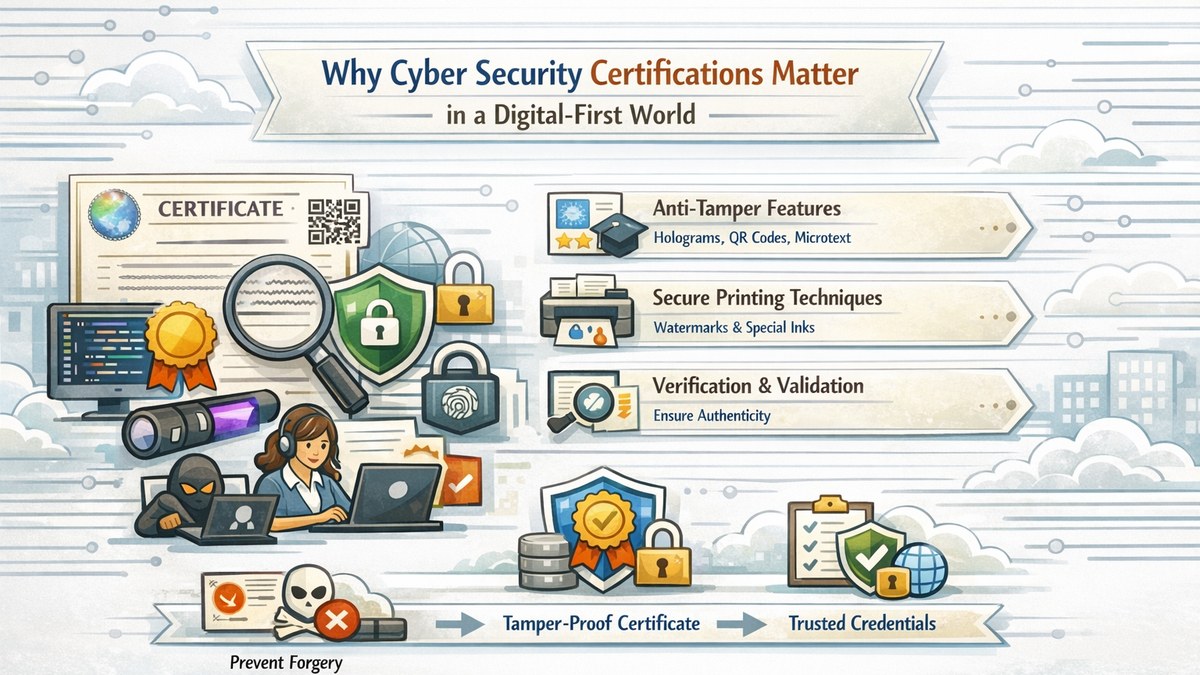
Certification culture contributes to this because it signals that cyber learning is not decorative. It is something that matters enough to be measured, recognized, and supported. When staff see that security capability is treated as a real professional development area, it gains credibility across the organization.
Awareness Is Important, but Awareness Alone Is Not Enough
Basic awareness training is valuable, but by itself it often has limited depth. People may remember a few warnings without understanding the broader logic behind them. For example, they may be told not to click suspicious links, but not fully understand why identity compromise is so damaging. They may be told to use strong passwords, but not grasp how privilege misuse or password reuse affects systemic risk. Without deeper context, awareness can remain superficial.
This is why organizations benefit from layered learning. General staff need awareness, but key operational roles need more structured and role-specific development. Certification can support that next layer. It provides formal progression for those who need stronger understanding and helps create internal champions who can reinforce secure practice more intelligently.
When awareness is connected to stronger internal capability, organizations become less dependent on slogans and more capable of building real operational discipline.
Certification Culture Helps Create Internal Leadership
Organizations become stronger when security knowledge is not confined to a small isolated team. Certification pathways can help identify and grow internal leaders across functions. These leaders may not all become full-time security specialists, but they can still improve how security is understood and practiced within their departments.
For example, an operations lead with stronger cyber understanding can improve escalation discipline. An HR leader with better security awareness can support more reliable access lifecycle practices. An academic or program coordinator can manage participant data more carefully. A finance manager can recognize higher-risk workflows sooner. These are not trivial contributions. They are part of what makes organizational security real rather than symbolic.
Certification culture therefore helps distribute security maturity. It creates points of competence in more places, which is often exactly what organizations need.
Why Leadership Support Makes a Difference
No awareness or certification culture can succeed if leadership treats security as a formality. Staff notice quickly whether secure behavior is actually valued. If convenience is always rewarded and risky shortcuts are routinely tolerated, culture weakens. By contrast, when leaders support training, respect escalation, invest in capability, and model responsible behavior, security culture becomes more believable.
This is another reason certification matters. It gives leaders something concrete to support. Instead of speaking only in broad language about cyber importance, they can back visible learning pathways and team development goals. This makes the cultural message more credible.
Leadership also influences whether learning is sustained. A one-time campaign rarely changes behavior. Repeated and structured investment does. Certification culture helps learning become part of the institution rather than a temporary response to fear.
Building a More Resilient Organization
Resilience is not the absence of incidents. It is the ability to reduce avoidable risk, respond more effectively, and recover with less confusion when problems occur. Security culture plays a major role in this. People who are better trained, more aware, and clearer about their responsibilities are less likely to worsen incidents through delay or disorder.
Certification culture contributes by creating a more disciplined core of staff who can support that resilience. It helps bridge the gap between policy and practice. It also improves trust. Partners, clients, students, and internal stakeholders are more likely to trust systems when the organization treats cyber competence as a real area of professional seriousness.
Even where resources are limited, this approach has value. Organizations do not need every employee to become a security specialist. But they do need more employees to behave with stronger security awareness and more key roles to develop structured competence. A blended awareness-and-certification culture supports exactly that.
Conclusion
Cyber security awareness and certification culture matter because secure organizations are built by people, not just by technology. Awareness helps broaden responsibility. Certification helps deepen capability. Together, they create a stronger and more reliable security culture across the institution.
Organizations that take this seriously are better positioned to reduce avoidable risk, strengthen internal discipline, and build resilience that extends beyond the security team itself. In a digital-first environment, cyber culture is not optional. It is part of institutional maturity.
References
- NIST. Workforce Framework for Cybersecurity (NICE Framework), SP 800-181 Rev. 1.
- ISC2. The State of the Cybersecurity Workforce.
- CyBOK. The Cyber Security Body of Knowledge.
- Professional literature on security culture, awareness, and workforce development.