FrameMaker Team
• 15 Apr 2026
• 10 views
Cyber security certifications help learners build structured skills, improve employability, strengthen trust with employers, and stay relevant in a field where digital risks continue to grow.
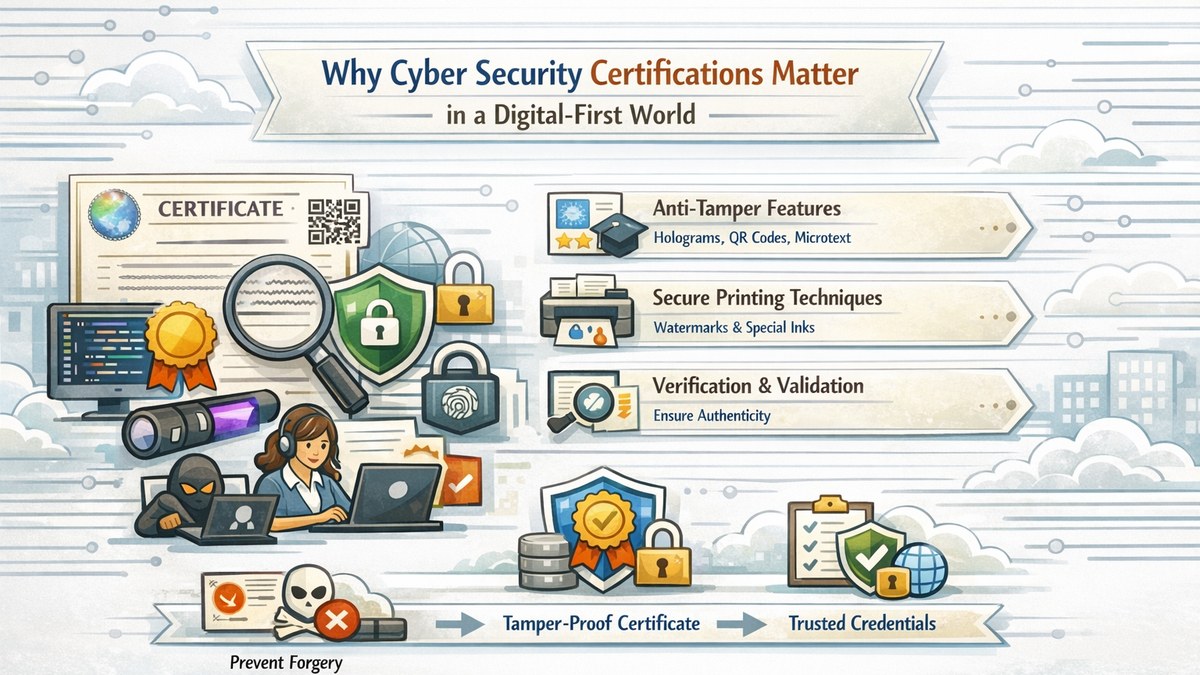
Why Cyber Security Certifications Matter in a Digital-First World
Cyber security has moved from the margins of IT to the center of modern institutional life. Banks, universities, hospitals, governments, research bodies, e-commerce platforms, startups, and large enterprises all depend on digital infrastructure for daily operations. Email, cloud storage, digital payments, identity systems, enterprise applications, learning platforms, customer data, research records, and internal communication now travel through connected systems that must remain available, trustworthy, and protected. In such a world, cyber security is no longer an optional specialization for a small technical team. It is a core requirement for continuity, resilience, and trust.
This shift has also changed how professionals are evaluated. It is not enough for someone to simply say they are interested in cyber security. Employers, institutions, and clients increasingly want evidence that a learner has followed a structured path, understands foundational security concepts, and is serious about professional development. This is why cyber security certifications have become increasingly important. A certification does not magically make someone an expert, but it does provide an organized route into the field and a recognized way to demonstrate readiness.
For students, fresh graduates, career changers, and working professionals, certification often serves as the bridge between curiosity and credibility. It can help convert scattered learning into a defined progression. For employers, it can make candidate screening more efficient and reduce uncertainty. For institutions, it can help build a more security-aware workforce. In a field where mistakes can expose systems, interrupt services, damage reputation, and increase legal or financial risk, the importance of disciplined preparation is difficult to overstate.
The Growing Importance of Cyber Security Skills
Digital risk continues to expand because organizations now rely on more interconnected systems than ever before. Cloud platforms, SaaS tools, remote access, mobile devices, APIs, online collaboration suites, and distributed teams have created enormous productivity benefits. At the same time, they have widened the attack surface. Security incidents today are rarely isolated technical glitches. They can become operational crises. A phishing email may lead to credential theft. A weak password policy may enable unauthorized access. A misconfigured server may expose sensitive data. A delayed security response may affect customers, students, patients, or business partners.
This reality has created sustained demand for security-aware professionals. Yet one of the biggest global challenges remains the shortage of qualified cyber talent. That is exactly why certification has become more valuable. When demand is strong and employers are under pressure to identify capable candidates, structured credentials become an important signal. They help differentiate between general interest and disciplined preparation.
The value of certification is not only about getting a job. It is also about learning how to think in a security-first way. Cyber security requires a mindset that combines vigilance, method, process, and accountability. Professionals must learn to evaluate risk, anticipate misuse, understand access control, recognize suspicious patterns, and follow reliable operational practices. Certification can support the early development of that mindset by introducing learners to a coherent body of knowledge rather than leaving them to piece together information in an ad hoc way.
Why Certifications Provide Structure in a Complex Field
One of the biggest barriers for learners is that cyber security is broad. Someone entering the field may hear about governance, risk and compliance, SOC operations, SIEM tools, phishing defense, ethical hacking, incident response, identity management, network security, cloud security, application security, audit, digital forensics, malware analysis, zero trust, vulnerability management, and secure architecture all at once. That breadth can be exciting, but it can also be confusing. Without a clear path, many learners lose momentum or jump randomly from one topic to another without building a real foundation.
Certifications help solve this problem by providing scope and sequence. They define what a learner should study, what domains matter, what terminology must be understood, and what level of proficiency is expected at a certain stage. This transforms cyber security learning from a vague ambition into a concrete pathway. A beginner might start with foundational concepts such as confidentiality, integrity, availability, basic network defense, authentication, common attacks, and security awareness. From there, more advanced or role-based paths can develop naturally.
Structured learning is especially important in cyber security because the field evolves quickly. A guided certification path does not eliminate change, but it helps learners hold onto stable foundational concepts while adapting to new threats, tools, and operating environments. This is one reason certifications continue to matter. They create a disciplined entry route into a moving field.
How Certifications Improve Employability
Employability is one of the clearest reasons people pursue cyber security certifications. Hiring in cyber security can be difficult because employers are trying to assess both technical understanding and professional reliability. Many applicants may use similar language on their resumes, but employers still need signals that help them identify who has invested serious effort into the field. A certification serves as one such signal. It indicates that the candidate has studied a recognized syllabus and met a defined standard.
For freshers and career changers, that signal can be highly valuable. It may not replace experience, but it can improve the chances of being shortlisted, interviewed, or considered for trainee and junior roles. It can also give hiring teams confidence that the applicant is not approaching cyber security casually. In crowded applicant pools, small credibility markers often matter, and certifications frequently serve that role.
For experienced professionals, certifications can support internal mobility and role transitions. Someone already working in IT, infrastructure, networking, cloud, or audit may wish to move into cyber security responsibilities. In such cases, a relevant certification can show intentional upskilling and help bridge the gap between adjacent technical experience and security-specific responsibilities. This can be useful when pursuing promotions, cross-functional moves, or more specialized assignments.
Why Employers Continue to Value Certifications
From the employer perspective, the appeal of certification is practical. Organizations need ways to map talent to roles. A security analyst role is different from a governance role, which is different from an incident response role or a cloud security role. Certifications help organizations create training pathways, hiring filters, and development plans that are more systematic. This becomes especially important where internal security maturity is still evolving.
Employers also value consistency. When people on a team share common terminology and understand core concepts in comparable ways, collaboration becomes easier. Security teams often need to work across functions such as IT operations, compliance, product, legal, data governance, vendor management, and executive oversight. A recognized certification framework helps align language and expectations.
Another reason employers value certification is risk reduction. Cyber security work is not just about technical achievement. It is about safe decision-making. Even junior professionals may handle sensitive alerts, investigate anomalies, support access controls, review logs, or assist in escalation workflows. Employers therefore want evidence that candidates have at least been exposed to foundational principles and accepted ways of working. Certification helps provide that baseline.
Certification and Professional Discipline
One of the less discussed but highly important benefits of certification is the discipline it creates. Good cyber security professionals do not rely on improvisation alone. They learn to work with standards, repeatable processes, documentation, escalation paths, and defensive reasoning. Certification often reinforces these habits. It encourages learners to think in terms of controls, safeguards, policies, risk categories, and operational hygiene.
This is important because cyber security is not only about tools. A person may know a few tools and still lack maturity in handling real-world risk. Conversely, someone who has built disciplined habits of analysis, documentation, verification, and secure thinking can grow faster and become more dependable over time. Certification can help cultivate that mindset early, especially when paired with labs, exercises, and applied learning.
It also encourages continuous learning. Security is not a static field. Threats change, technologies evolve, and new attack patterns emerge. Certification introduces the idea that serious professionals keep updating themselves. That is a healthy norm in a domain where outdated assumptions can become dangerous.
The Role of Certifications in Workforce Development
The value of cyber security certification extends beyond individual career growth. It also plays an important role in workforce development at the organizational and societal level. Educational institutions, enterprises, health systems, training providers, government bodies, and service organizations all need more people who can work securely in digital environments. Certifications can support this by giving training programs a recognizable benchmark and helping learners follow role-aligned progressions.
For institutions building internal capacity, certifications can act as a planning tool. Teams can define which roles need foundational awareness, which roles need deeper operational expertise, and which leaders need stronger understanding of governance, risk, and oversight. This makes cyber capability easier to build intentionally rather than reactively.
At a broader level, certifications also help widen access to the profession. Not everyone entering cyber security comes through the same academic path. Some come from networking, software, audit, support, systems administration, analytics, military backgrounds, or completely unrelated fields. A good certification can provide a bridge for such learners, making cyber security more accessible without lowering seriousness.
Why Certification Is Not a Substitute for Practice
A balanced discussion must also be clear about limits. Certification is valuable, but it is not enough on its own. Cyber security remains a practice-oriented field. Real capability develops through labs, simulations, guided exercises, project work, case-based reasoning, internships, operational exposure, and sometimes through handling actual incidents. A professional who has only memorized exam content will struggle if they have never applied concepts under realistic conditions.
That said, this limitation does not reduce the importance of certification. It simply clarifies its role. Certification is best seen as a structured foundation and a credible signal, not as a complete substitute for experience. When combined with practical learning, it becomes far more powerful. In fact, the best pathways usually combine all three: structured study, validated certification, and hands-on application.
This combination is especially useful for early-career learners. A certificate can help them get noticed, but labs and practical exercises help them perform well once they reach interviews or actual work settings. Therefore, the smartest approach is not to chase certificates mechanically, but to choose relevant certifications and reinforce them with real practice.
Strategic Value for Institutions and Teams
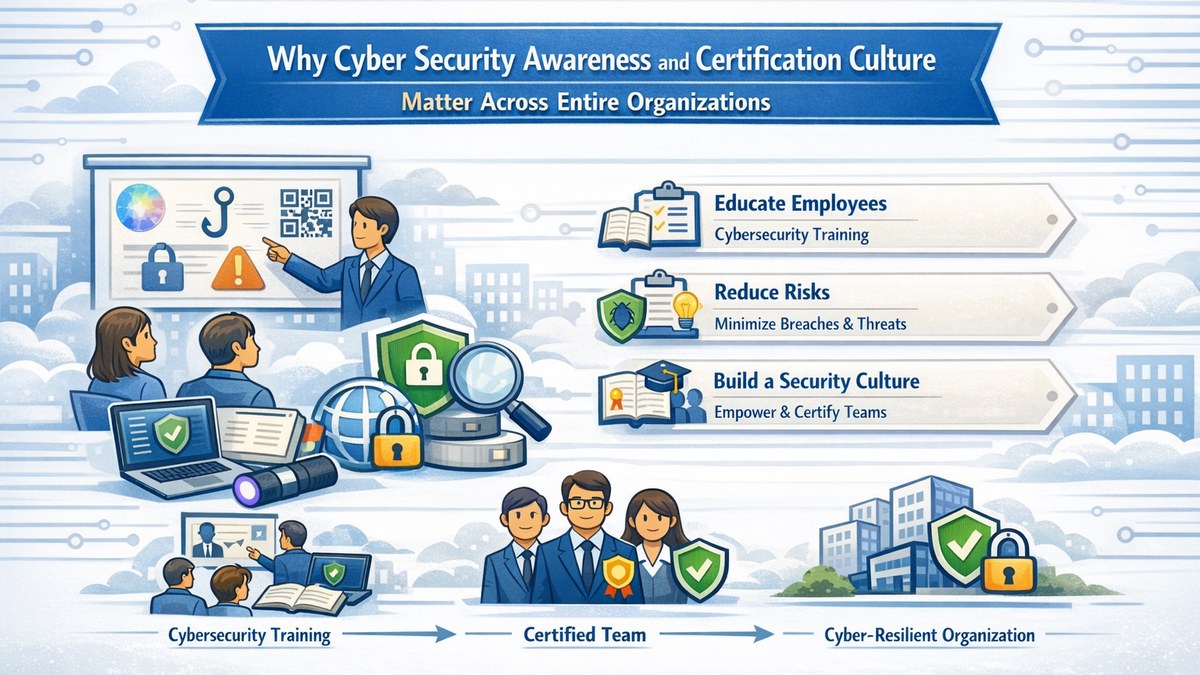
For institutions, certified professionals can strengthen both operational security and organizational confidence. Teams with stronger cyber foundations are better positioned to implement safe access practices, respond to suspicious events, support policy enforcement, contribute to audits, and reduce avoidable mistakes. They can also support security awareness efforts across the organization, which is increasingly important because cyber risk often involves human behavior as much as technical configuration.
In many organizations, security is still seen as a last-minute technical fix. Certification contributes to a better culture by making security a visible professional competency. It communicates that cyber readiness is something worth investing in, measuring, and developing systematically. That message matters for management as well as staff.
Institutions that promote cyber learning and encourage recognized certifications are also more likely to create internal pathways for growth. This improves retention and helps create a stronger long-term talent pipeline. In other words, certification has value not only for recruitment, but also for professional development, role clarity, and institutional maturity.
Conclusion
Cyber security certifications matter because they bring structure, credibility, and direction to one of the most important professional domains of the digital age. They help learners move from scattered interest to organized competence. They help employers reduce uncertainty in hiring. They help institutions build stronger internal capability. They also support the broader professionalization of cyber security by linking learning to frameworks, shared terminology, and recognized expectations.
Certification should never be treated as a shortcut or a substitute for practical ability. But when pursued thoughtfully, it becomes a powerful tool. It can support employability, improve confidence, encourage discipline, and create a clearer path into specialized cyber roles. In a world where digital systems are critical and cyber risks are persistent, the ability to demonstrate serious, structured preparation has real value.
For students, professionals, and organizations alike, the message is clear: cyber security is too important to be learned casually. Certifications, especially when paired with practice and continuous learning, offer a meaningful way to build trusted capability in a field where competence truly matters.
References
- NIST. Workforce Framework for Cybersecurity (NICE Framework), SP 800-181 Rev. 1. National Institute of Standards and Technology.
- ISC2. The State of the Cybersecurity Workforce, 2024 workforce insights.
- ISC2. Cybersecurity Hiring Trends Report, 2025.
- CyBOK. The Cyber Security Body of Knowledge, Version 1.1.0.
- NICE Framework guidance on role-based development, communication, and workforce planning in cybersecurity.
- Research and professional literature on certification signaling, cyber skills development, and workforce readiness.