FrameMaker Knowledge Hub
• 22 Apr 2026
• 5 views
An insightful article on the unwritten rules of university life, including communication, initiative, self-management, and navigating campus systems.
The Hidden Curriculum of College: What Successful Students Learn Beyond the Syllabus
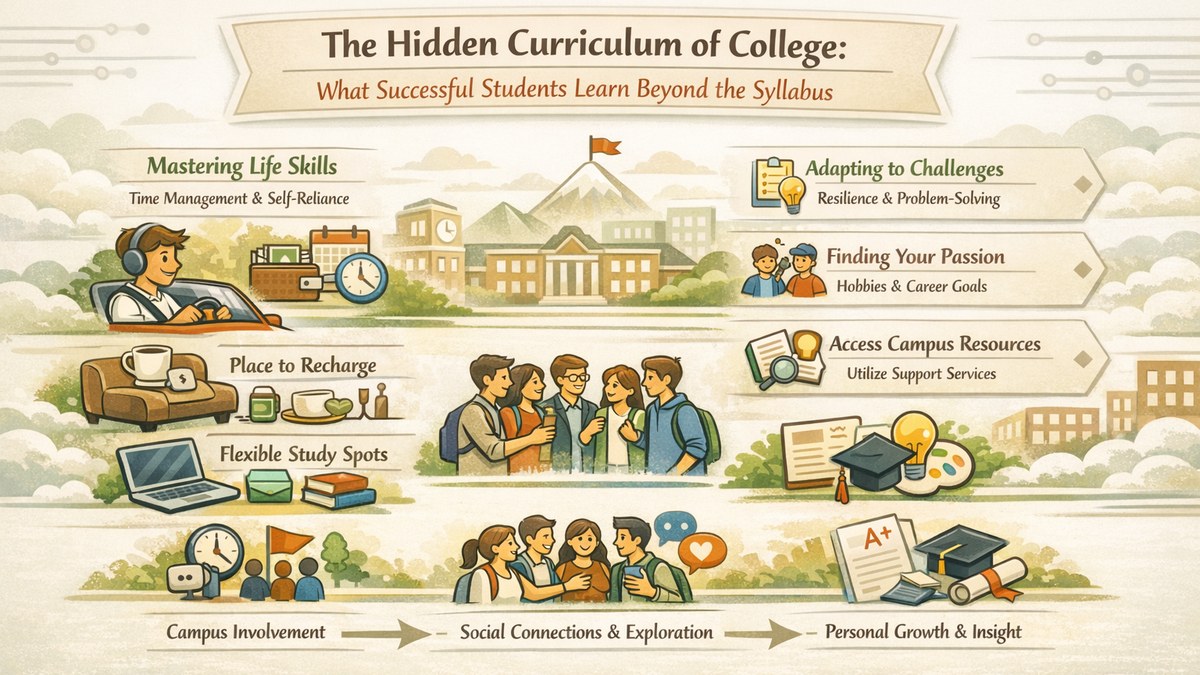
When students enter university, they usually expect to learn the official curriculum of their chosen program. They prepare to attend lectures, complete assignments, write exams, and master subject knowledge. Yet there is another curriculum operating quietly in the background: a set of unwritten expectations, behaviors, and assumptions that shape how students function within higher education. This is often called the hidden curriculum.
The hidden curriculum includes the informal rules that are rarely explained fully but are constantly rewarded. Knowing how to email a faculty member professionally, how to ask for clarification early, how to read a syllabus carefully, how to manage deadlines across courses, how to participate in group work, how to present oneself in academic spaces, and how to use campus systems effectively are all part of this invisible learning.
Students who understand these norms often appear naturally confident, but in many cases they simply have earlier exposure, better guidance, or faster access to institutional knowledge. Students who do not understand the hidden curriculum may incorrectly assume they are less capable, when in fact they are navigating rules that were never clearly made visible.
Why the Hidden Curriculum Matters
The hidden curriculum influences academic success, belonging, confidence, and opportunity. A student may understand the subject matter but still struggle because they do not know how to manage expectations around communication, participation, time, feedback, or institutional procedures. Another student may perform better not only because of knowledge, but because they know how to operate within the system more effectively.
This matters especially for first-generation students, those from under-resourced schooling backgrounds, students adjusting to a new language environment, commuters, or anyone entering a university culture that feels unfamiliar. Without explicit guidance, these students may spend unnecessary energy decoding how college works.
Examples of the Hidden Curriculum
- understanding that office hours or faculty consultation exist to be used,
- knowing that asking questions early is viewed positively,
- realizing that deadlines often require planning backward from the due date,
- understanding the importance of reading instructions carefully,
- recognizing that professionalism includes punctuality and respectful communication,
- learning that campus opportunities often go to those who respond early and participate visibly, and
- understanding that support services are part of success, not a last resort.
None of these may appear as credit-bearing content in a course outline, yet each can influence a student’s educational trajectory.
Why Some Students Learn It Faster Than Others
Students do not begin college from identical starting points. Some arrive with family members who have already been through higher education. Some attend schools where independent study, academic communication, and self-management are taught explicitly. Others depend entirely on what they can infer once classes begin. This does not make one group more intelligent than another. It simply means access to hidden rules is uneven.
That is why institutions should be careful not to treat confidence as proof of readiness. Quiet students may be highly capable but still unfamiliar with the language and habits of higher education.
How Students Can Learn the Hidden Curriculum More Intentionally
1. Observe how successful students work
Notice how they organize deadlines, ask questions, participate, and communicate. Many of the hidden rules become visible through observation.
2. Read course documents carefully
Students often miss crucial expectations that are actually written down. Syllabi, assignment briefs, rubrics, and official notices contain important clues about how the institution functions.
3. Ask process questions, not only content questions
It is useful to ask not only “What does this concept mean?” but also “How should I prepare for this type of assessment?” or “What does good performance in this course usually look like?”
4. Use mentors and seniors
Senior students often understand the informal side of the institution well. Their guidance can save new students significant confusion.
5. Practice professional communication
Email etiquette, timely responses, respectful follow-up, and clarity in requests are part of academic and career development.
What Institutions Should Do
Universities should not leave the hidden curriculum entirely hidden. First-year orientation, academic success workshops, peer mentoring, faculty communication, and advising systems should make institutional expectations more visible. Students deserve explicit teaching not only in what to learn, but also in how to navigate the environment in which learning happens.
Making the hidden curriculum visible is also an equity issue. When students know the rules, opportunity becomes more accessible. When they do not, performance can reflect familiarity with the system rather than actual potential.
The Long-Term Value of Learning These Unwritten Rules
Students who learn the hidden curriculum gain more than academic efficiency. They build self-management, professional presence, interpersonal skill, and institutional confidence. These qualities transfer into internships, employment, further study, and leadership roles.
In this sense, the hidden curriculum is not a side issue. It is one of the mechanisms through which higher education shapes identity, opportunity, and success.
Conclusion
College success depends on more than the visible syllabus. It also depends on how well students understand the unwritten expectations that govern participation, communication, initiative, and help-seeking. Students who struggle with these invisible rules are not necessarily underprepared in ability. Often, they simply need clearer access to the culture of higher education.
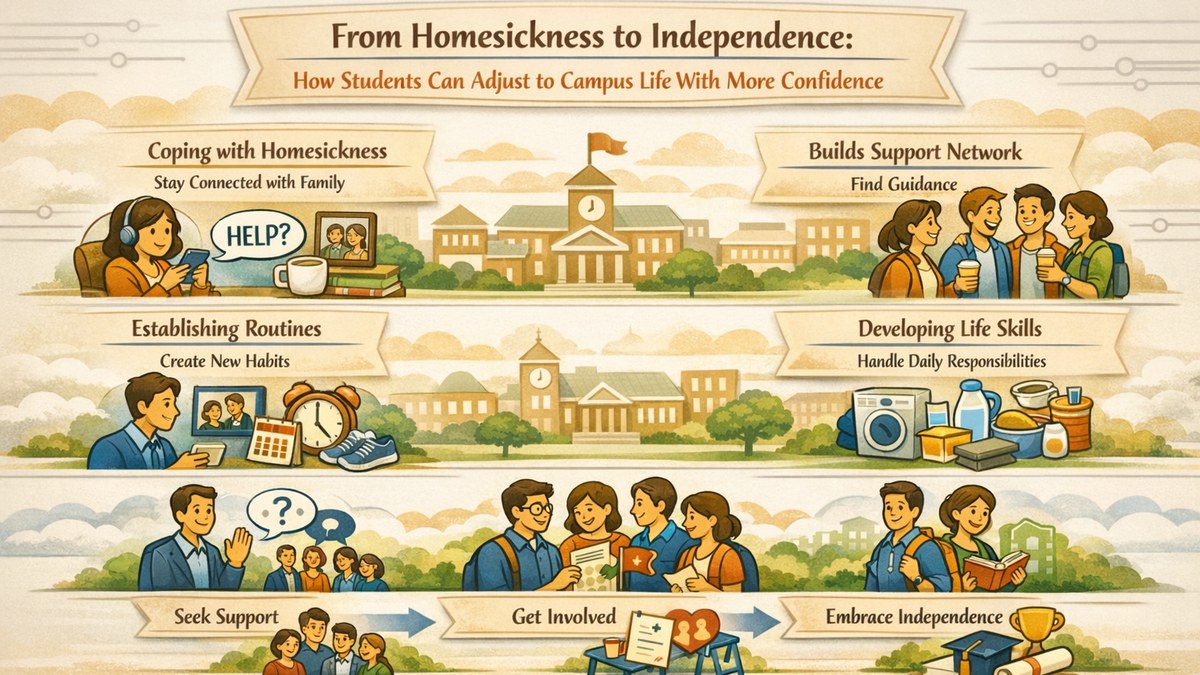
Once the hidden curriculum becomes visible, students can navigate campus life with more confidence and less confusion. That is good for academic performance, good for belonging, and good for the broader educational mission of the university.
References
- AAC&U. High-Impact Practices.
- NSSE. Evidence-Based Improvement in Higher Education.
- Strayhorn, T. L. College Students' Sense of Belonging.
- UNESCO. Global Education Monitoring Report.
- OECD. Students' Well-being.