FrameMaker Knowledge Hub
• 22 Apr 2026
• 5 views
An in-depth practical guide to how belonging influences retention, confidence, wellbeing, academic engagement, and the overall student experience in colleges and universities.
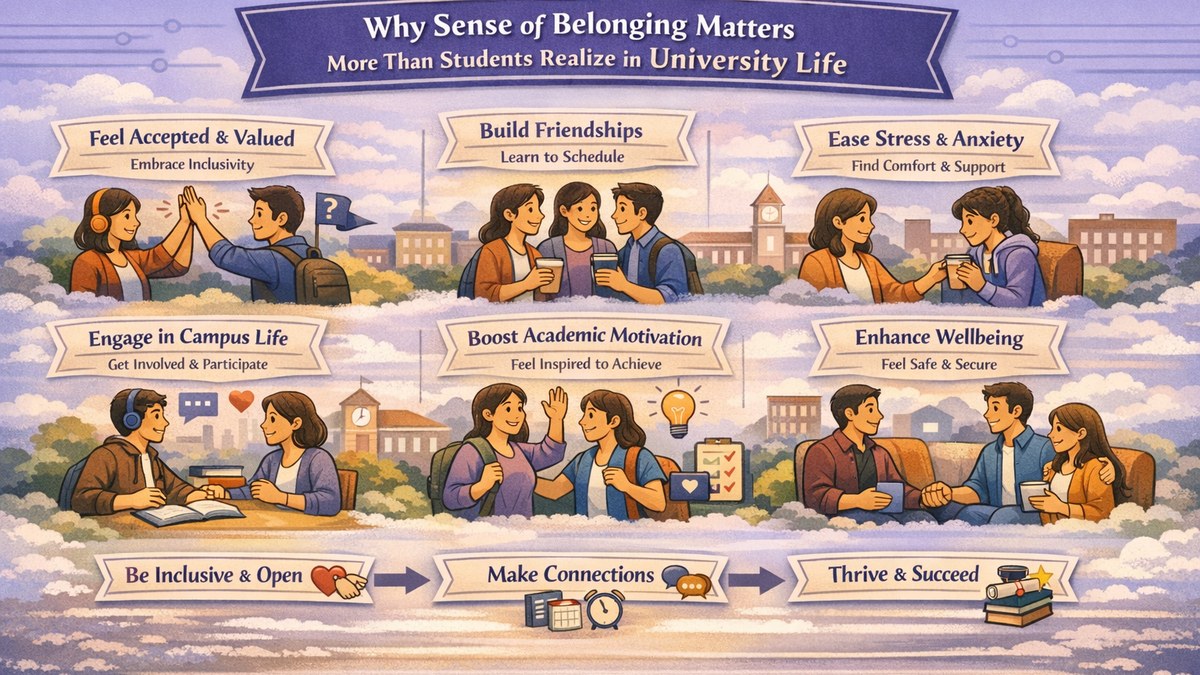
Why Sense of Belonging Matters More Than Students Realize in University Life
When students talk about success in college, they often focus on grades, placements, exams, attendance, or internships. These are visible markers of achievement, but they are not the whole story. Beneath all of them lies a quieter force that shapes whether students thrive, withdraw, participate, or merely survive: a sense of belonging.
Belonging is not a decorative idea meant only for welcome speeches, orientation weeks, or student clubs. It is a practical condition of academic persistence. Students learn better when they feel seen. They ask more questions when they feel safe. They recover faster from setbacks when they feel connected. They are more willing to participate in campus life when they believe that they are legitimate members of the university community rather than outsiders trying to fit in.
In many institutions, belonging is misunderstood as a soft concept, less important than timetables, credits, assessments, or infrastructure. In reality, it affects all of those things. A student who feels isolated may stop attending classes regularly, avoid faculty interaction, withdraw from peer networks, and delay asking for help until problems become severe. By contrast, a student who feels that campus is “their place” is more likely to engage, persist, and use institutional resources meaningfully.
What Belonging Really Means
Belonging is the feeling that one is accepted, respected, included, and supported within a learning environment. It is both emotional and practical. It includes the ability to form friendships, connect with teachers, participate in discussions, join activities, and feel that one's background does not automatically push one to the margins.
This is not about popularity. A student does not need to know everyone on campus to have a sense of belonging. Instead, the student needs repeated evidence that the university has room for them, that their efforts matter, and that support is available without shame.
Belonging also has an academic side. Students are more confident about contributing in class, seeking feedback, collaborating on projects, and visiting faculty during office hours when they do not fear embarrassment or exclusion. Over time, these seemingly small behaviors add up to stronger learning outcomes.
Why Belonging Affects Academic Performance
Students do not leave higher education only because of intellectual difficulty. Many leave because difficulty arrives in an atmosphere of loneliness, confusion, and emotional fatigue. Academic challenges are far easier to manage when students have supportive peers, responsive faculty, and a campus culture that normalizes help-seeking.
A student who belongs is more likely to:
- attend classes consistently,
- participate in group work and campus events,
- approach faculty members with questions,
- use counseling, advising, writing, or tutoring support,
- remain motivated during stressful periods, and
- persist into the next semester or year.
Belonging does not eliminate stress, but it changes how students experience stress. Problems feel temporary rather than defining. Setbacks feel manageable rather than humiliating. Students begin to think, “I had a bad week,” instead of “Maybe I do not deserve to be here.” That shift matters enormously.
How Campus Life Builds or Breaks Belonging
Belonging is shaped by daily experiences. Orientation matters, but what happens after orientation matters even more. Students interpret the institution through routine signals: whether teachers learn their names, whether campus events feel welcoming, whether notices are clear, whether seniors are approachable, whether differences are respected, and whether support offices are easy to access.
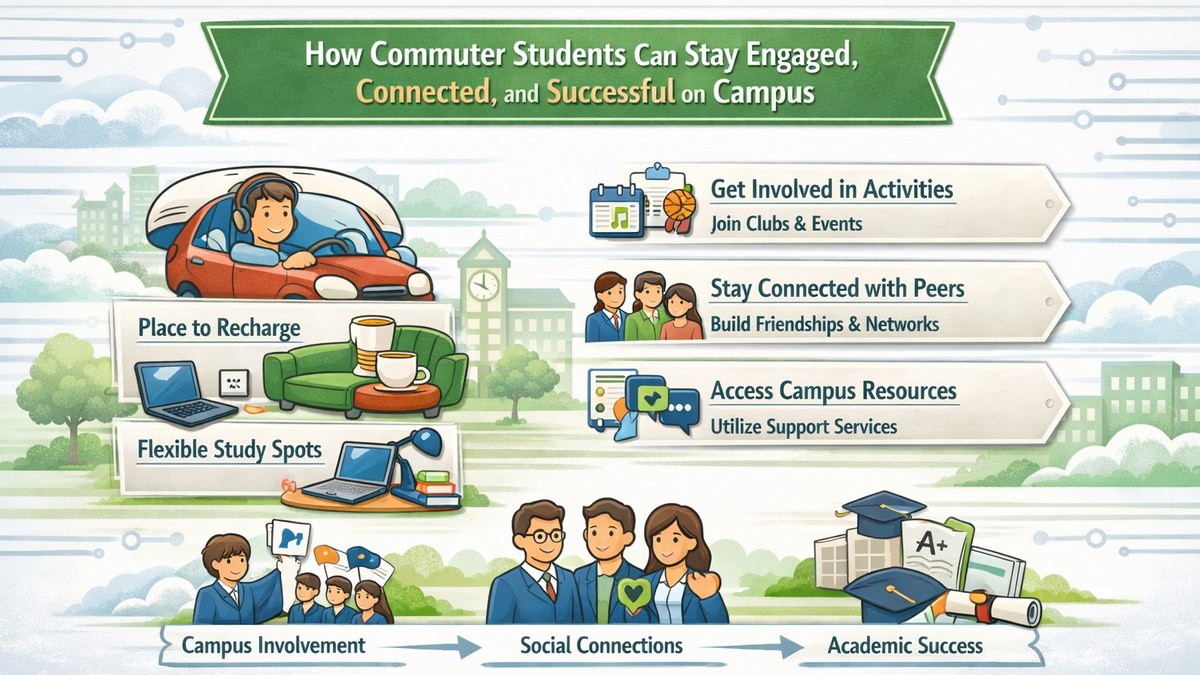
Some campuses unintentionally create a two-tier experience. A small group quickly becomes connected and informed, while others remain peripheral. Students who are first-generation learners, commuters, shy participants, language-minority students, financially stressed students, or those from less represented backgrounds can feel particularly invisible unless institutions design inclusion deliberately.
Physical and digital spaces both matter. A student may attend classes physically but still feel absent from campus life if all meaningful communication, community building, and peer networks operate informally through circles they never enter. Belonging therefore has to be cultivated in classrooms, corridors, clubs, advising systems, online portals, and student communications alike.
Belonging During the First Year
The first year is especially important. Students are learning new academic expectations while also adapting socially and emotionally. Many are living away from home for the first time. Others are balancing commuting, work, or family duties. Some arrive highly confident and still struggle quietly. Some appear reserved but become highly successful once they find even a small circle of trust.
In this phase, belonging is built through repeated small wins:
- being greeted and guided rather than judged,
- finding one or two meaningful peer relationships,
- having clear information instead of administrative confusion,
- receiving feedback that is constructive rather than discouraging, and
- discovering at least one community, activity, or mentor connection on campus.
Universities often underestimate how much uncertainty students carry in the first semester. Even capable students may not know how to read a syllabus properly, email a professor, use the library, prepare for lab work, or navigate deadlines across multiple courses. When institutions treat such confusion as normal and support students without stigma, belonging grows.
What Students Can Do to Build Belonging for Themselves
Institutions have a major responsibility, but students are not powerless. Belonging can be strengthened through intentional habits.
1. Show up consistently
Attendance is not only about compliance. It is one of the fastest ways to become visible, understand expectations, and feel part of a learning community.
2. Speak once more than feels comfortable
Asking one question in class, introducing yourself to one peer, or meeting one faculty member can gradually reduce the psychological distance between you and the institution.
3. Join one structured activity
A club, student association, volunteering initiative, campus publication, sports group, or event committee gives social contact a structure. Friendship becomes easier when people meet with a shared purpose.
4. Use one support service before a crisis
Meeting an advisor, visiting the writing center, attending a library orientation, or using counseling support early makes help-seeking feel normal rather than desperate.
5. Build a small network, not a large audience
Students do not need dozens of connections. Often, one mentor, two classmates, and one student group are enough to create a meaningful anchor.
What Universities Should Strengthen
Belonging cannot depend on luck. It should be designed into the student experience. Institutions that take student success seriously should examine whether their practices make connection easier or harder.
Useful institutional actions include:
- better first-year transition support,
- faculty development on inclusive teaching,
- peer mentoring and buddy systems,
- clear and repeated communication about student services,
- more welcoming common spaces and student programming,
- early alerts for disengagement, and
- student feedback systems that lead to visible improvements.
Belonging is strengthened when students can see that the institution responds to their realities rather than only to policy documents. Students notice when systems are humane.
Belonging Is Not an Extra. It Is the Foundation.
There is a tendency in higher education to divide student life from academic life, as though one concerns enjoyment and the other concerns achievement. In practice, these worlds overlap constantly. Confidence affects learning. Social connection affects persistence. Mental wellbeing affects concentration. Campus participation affects identity and motivation.
A university experience becomes transformative when students do not merely pass through campus but feel rooted in it. Belonging is the bridge between access and success. It is the difference between being admitted and truly being included.
For students, the lesson is simple: do not dismiss connection as secondary to academic work. It is part of academic work. For institutions, the message is equally clear: if belonging is weak, student success will remain uneven no matter how strong the formal curriculum looks on paper.
References
- NSSE. Sense of Belonging: Annual Results 2020.
- NSSE. A NSSE Data User's Guide: Sense of Belonging.
- Strayhorn, T. L. College Students' Sense of Belonging.
- OECD. Students' Well-being.
- UNESCO. Global Education Monitoring Report.