FrameMaker Knowledge Hub
• 22 Apr 2026
• 5 views
A thoughtful article on friendship, social adjustment, belonging, and how students can build meaningful relationships on campus without pressure.
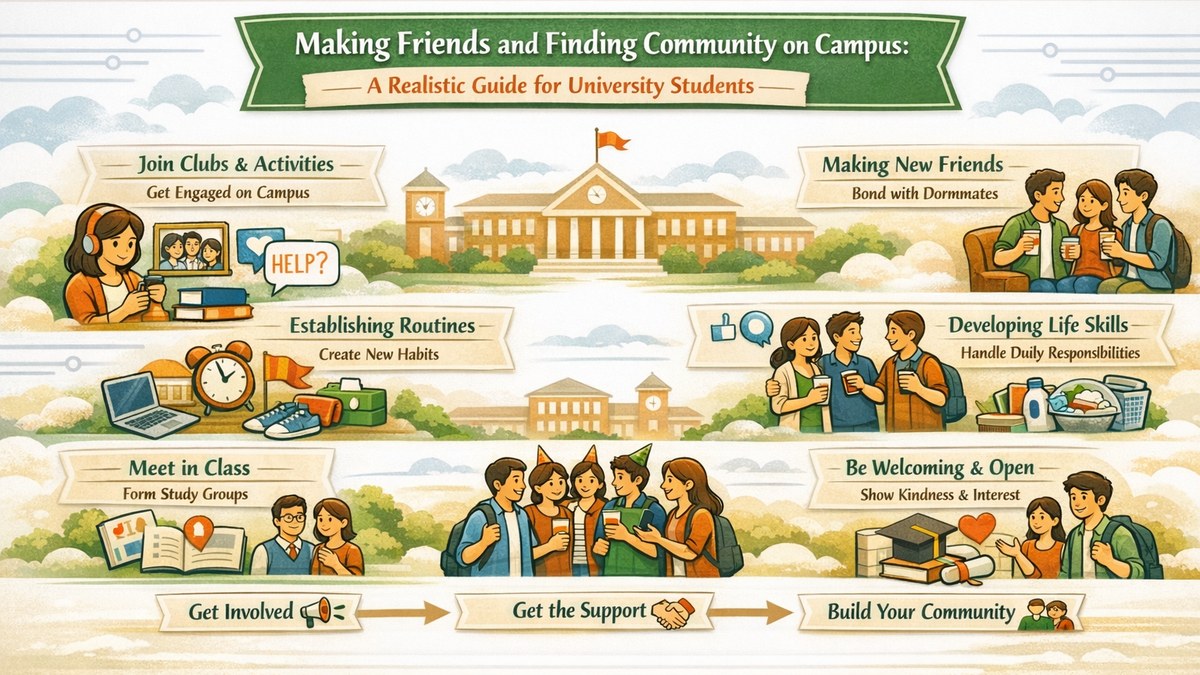
Making Friends and Finding Community on Campus: A Realistic Guide for University Students
One of the least discussed but most powerful parts of university life is the ability to form meaningful human connections. Students may enroll for a degree, but their experience of campus is shaped just as strongly by whether they find friendship, trust, and community. Academic systems matter, yet no timetable can replace the value of feeling that there are people on campus who know your name, care whether you show up, and make the environment feel less anonymous.
Despite this, many students silently struggle with social adjustment. Some arrive at university expecting friendship to happen naturally and feel disappointed when it does not. Others are shy, commuting long distances, adjusting to a new language environment, or entering a campus where existing social groups already seem formed. Some students appear surrounded by people and still feel lonely. All of this is more common than many imagine.
The good news is that community on campus does not need to look dramatic to be real. Students do not need a large social circle to feel connected. Often, a few dependable relationships and one or two meaningful communities are enough to transform the college experience.
Why Friendship Matters in Student Success
Friendship is sometimes treated as secondary to academic work, but it has clear educational consequences. Students who feel socially connected are often more likely to attend regularly, share information, ask for notes when absent, join study groups, participate in events, and recover more quickly from difficult periods. Social ties can reduce stress, normalize struggle, and provide encouragement when motivation drops.
Friendship also protects against isolation. Students who feel completely alone on campus may start withdrawing from class participation, avoiding events, and internalizing normal challenges as personal failure. Even one or two positive connections can interrupt that cycle.
Why Making Friends Feels Harder Than Expected
Students often assume friendship should happen quickly because everyone is in the same life stage. In reality, university friendship is shaped by many factors: time schedules, commuting patterns, hostels versus day scholar status, language comfort, personality differences, family obligations, digital habits, and pre-existing school friend groups.
Some students become discouraged because they compare their real life to the visible social confidence of others. They see people talking easily in canteens, posting group photos, or appearing instantly settled. What they do not see is that many students are uncertain too, just hiding it better.
A More Realistic View of Campus Community
Community on campus does not always begin with deep friendship. More often, it begins with repetition. Sitting in the same place. Speaking to the same classmates. Joining the same activity regularly. Helping in a club event. Working on a committee. Meeting the same people often enough that conversation becomes easier.
This matters because students sometimes wait for social certainty before participating. It is usually the other way around: participation creates familiarity, and familiarity creates comfort.
Practical Ways Students Can Build Connection
1. Start with small consistency
Greeting the same classmates, arriving a few minutes early, and staying available for brief conversations after class are simple but effective ways to become socially visible.
2. Join one structured activity
Friendship grows more naturally in environments with a shared purpose. Clubs, sports, volunteering, cultural activities, campus publications, or student committees reduce the pressure of forced conversation.
3. Ask practical questions
Students often find it easier to begin with concrete interaction: asking about a class, assignment, event, or schedule. Social comfort often follows practical exchange.
4. Be open without oversharing
Friendship builds through mutuality. Being warm, helpful, and dependable matters more than trying too hard to impress others.
5. Maintain contact
One conversation does not become a relationship automatically. Students need repeated follow-up, whether through sitting together again, messaging about class, or meeting at an event.
For Students Who Are Introverted or Socially Anxious
Not every student wants a highly social campus life. Some prefer smaller circles, quieter conversations, and structured interactions. That is entirely valid. Community does not require extroversion. Introverted students often build strong, durable friendships because they value depth and reliability.
Students who feel anxious in large settings can begin with lower-pressure spaces: library discussions, department activities, volunteering tasks, mentoring programs, or one-to-one academic conversations. The goal is not to change personality. The goal is to create connection in ways that feel possible.
How Digital Life Helps and Hurts
Online communication can help students stay connected, but it can also distort campus social life. Group chats may create information flow without emotional closeness. Social media can intensify comparison and make students feel excluded from experiences that are only partially real or selectively displayed.
Students should treat digital communication as a bridge, not a substitute. Real community grows more strongly through shared time, repeated interaction, and dependable presence.
What Universities Can Do Better
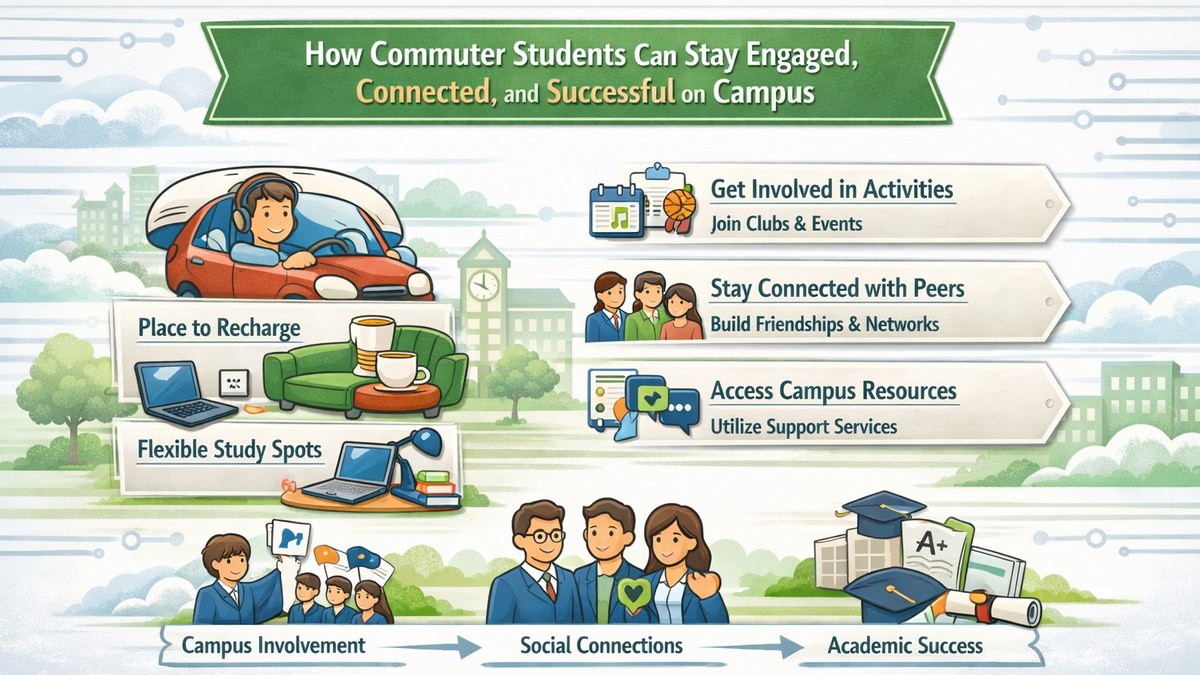
Institutions should not assume students will “figure out” social belonging on their own. Universities can support connection by designing better first-year programs, peer mentoring, inclusive student spaces, commuter-friendly engagement options, and low-pressure opportunities for repeated interaction. Faculty can contribute too by encouraging collaboration and making classrooms feel more human and participatory.
Community becomes stronger when campuses create multiple entry points for different kinds of students, not only for the already confident or highly connected.
Conclusion
Friendship and community are not minor extras in university life. They shape how campus feels, how students cope, and how fully they participate in learning. Students do not need a perfect social life or a large network to belong. They need a few relationships, a few shared spaces, and enough continuity to feel that the institution is not just a place they attend, but a place where they are known.
Building community takes time, but it is worth the effort. In many cases, the relationships students develop on campus become not only the support system for academic survival, but also one of the most lasting and meaningful parts of higher education.
References
- Strayhorn, T. L. College Students' Sense of Belonging.
- NSSE. Sense of Belonging: Annual Results.
- OECD. Students' Well-being.
- JED Foundation. Equity in Mental Health Framework.
- UNESCO. Global Education Monitoring Report.