FrameMaker Knowledge Hub
• 25 Apr 2026
• 2 views
A scholarly and current long-form article on the major forces reshaping higher education, including AI, equity, completion, mobility, employability, digital transformation, and institutional trust.
Higher Education in 2026: The Big Shifts Students and Universities Need to Understand
Higher education in 2026 stands at an inflection point. Around the world, colleges and universities are being asked to do more than expand access or preserve academic traditions. They are now expected to support completion, improve student wellbeing, adopt technology responsibly, respond to labor-market change, strengthen public trust, and create learning environments that are more flexible, inclusive, and future-oriented. These expectations are not arriving one at a time. They are converging. The result is a sector under pressure, but also one with an opportunity to redefine its purpose with greater clarity.
For students, these changes are not abstract policy themes. They shape everyday academic life: how courses are taught, how assessments are designed, how support is delivered, how digital systems are used, what counts as employability, and what a degree is expected to mean in a changing economy. For universities, the challenge is equally profound. Institutions are no longer judged only by prestige, selectivity, or research output. Increasingly, they are judged by whether students are able to progress, complete, belong, adapt, and thrive.
The most important reality in 2026 is that higher education is being reshaped by a cluster of overlapping forces rather than by one single trend. Artificial intelligence, digital transformation, tertiary completion, international mobility, student wellbeing, and skills pressure are all interacting with one another. Universities therefore need responses that are not reactive and fragmented, but strategic and integrated.
1. Expansion Is Continuing, but Access Alone Is No Longer Enough
Global higher education continues to expand, bringing new populations of learners into universities and other tertiary institutions. This expansion is significant because it reflects the growing social, economic, and civic importance of advanced learning. Yet the older policy goal of widening participation is now being supplemented by a more demanding question: what happens after entry?
In previous decades, success in higher education policy was often measured by admission and enrollment growth. In 2026, that is no longer sufficient. Institutions are increasingly expected to demonstrate that students do not merely enter the system, but are able to navigate it successfully. This means that access must now be linked to progression, completion, meaningful learning, and long-term opportunity.
The shift matters because mass participation changes the educational landscape. Students arrive with more varied academic preparation, financial conditions, linguistic backgrounds, family responsibilities, and levels of familiarity with institutional culture. A system designed for a narrower and more homogeneous student population cannot automatically meet the needs of a broader one. As participation grows, institutional design must become more intentional, more flexible, and more humane.
2. Completion, Retention, and Progression Have Become Central Indicators of Quality
One of the clearest changes in current higher-education thinking is the move from access as an endpoint to completion as a core measure of success. Governments, policymakers, and institutional leaders increasingly view retention and completion rates as important indicators of educational quality, social mobility, and public value. This is not simply because graduation numbers look better in reports, but because non-completion often carries deep personal and structural costs.
When students do not complete their programs, the reasons are rarely academic alone. Attrition may reflect weak first-year transition support, poor advising, lack of academic belonging, financial pressure, mental-health strain, unclear assessment expectations, or rigid program design. In this sense, completion data often reveals how well or how poorly a university functions as an ecosystem.
This is why the best institutions in 2026 are paying closer attention to early-warning systems, bridge programs, mentoring structures, academic support, financial guidance, and clear curricular pathways. Completion is increasingly understood not as a narrow administrative metric, but as a lived measure of whether students can make their way through the institution with confidence and support.
For students, this shift matters because it strengthens the argument that asking for help, using support services, and engaging with faculty are not marginal behaviors. They are central to how modern institutions expect success to be built.
3. Artificial Intelligence Has Moved from Classroom Issue to Institutional Issue
Artificial intelligence is perhaps the most visible force reshaping higher education in 2026, but the conversation has matured. The earliest phase of AI debate focused heavily on academic integrity: whether students were using generative tools to write assignments or circumvent authentic assessment. That issue remains important, but it is now only one part of a much wider transformation.
AI is increasingly affecting teaching, administration, research support, student communications, advising, content production, and institutional operations. Universities are therefore facing questions that go beyond prohibition or permission. They now have to decide how AI should be governed, what responsible use looks like, where human oversight is non-negotiable, and how to ensure that AI adoption does not undermine trust, equity, or educational purpose.
For students, this means AI literacy is quickly becoming part of academic literacy. Learners need more than warnings about misuse. They need the ability to evaluate outputs critically, verify claims, disclose use appropriately, protect privacy, identify bias, and understand where machine assistance can help and where it can distort learning. The educational challenge is not merely technical. It is epistemic and ethical. Students must learn how to work with powerful tools without surrendering judgment to them.
For institutions, the challenge is equally complex. A university that refuses to engage with AI may become pedagogically outdated, while one that adopts AI uncritically may weaken academic standards and institutional trust. The responsible path lies between panic and hype: measured experimentation, transparent policy, assessment redesign, and strong human accountability.
4. Digital Transformation Is Now Expected to Be Student-Centred
Digital transformation in higher education once referred largely to infrastructure: learning platforms, online systems, digital libraries, and administrative modernization. In 2026, students and staff expect more than digitization. They expect coherence, usability, flexibility, and responsiveness. It is no longer enough for an institution to have multiple digital systems if those systems are fragmented, confusing, or burdensome to navigate.
Students increasingly compare their university experience not only with other universities but with digital experiences in the wider world. They notice when systems are slow, repetitive, opaque, or poorly integrated. They also notice when technology genuinely helps them manage coursework, find resources, communicate with staff, and access support efficiently.
This means digital transformation must now be evaluated through a student-experience lens. Universities need to ask whether their platforms reduce friction or increase it, whether communication is clear, whether digital access is equitable, and whether flexibility enhances learning rather than merely adding convenience. Good digital systems are no longer a bonus. They are part of educational credibility.
5. Student Wellbeing Has Become a Strategic, Not Peripheral, Concern
Student wellbeing is no longer viewed only as a counseling-center issue or a matter for occasional awareness campaigns. In 2026, it is increasingly understood as a strategic concern linked to retention, performance, attendance, belonging, and institutional effectiveness. This is a major conceptual shift. It recognizes that students do not learn in abstraction from their emotional, social, and physical realities.
Financial pressure, loneliness, academic stress, transition difficulty, digital overload, and uncertainty about the future all affect a student’s ability to participate fully in higher education. Institutions that ignore these realities may continue to deliver content, but they will struggle to sustain student confidence and persistence.
The most thoughtful universities are therefore moving beyond symbolic wellbeing language toward more practical support: easier access to services, clearer communication, proactive outreach, healthier assessment design, peer mentoring, and attention to the conditions that shape everyday student life. For students, this matters because it reframes wellbeing not as a distraction from academic seriousness, but as one of its enabling conditions.
6. International Mobility Is Being Reframed Through Inclusion and Equity
International mobility remains a defining feature of global higher education, but it is now being interpreted through a more critical lens. It is no longer sufficient for institutions to measure success simply by the number of international students they enroll or the number of exchange agreements they sign. The more pressing question is whether mobility is genuinely inclusive, educationally meaningful, and supported beyond recruitment.
Students who cross borders for study often face complex challenges: language adjustment, academic adaptation, housing, administrative uncertainty, belonging, financial pressure, and future career anxiety. In response, universities are being pushed to think of mobility not merely as an internationalization strategy, but as an issue of equity, design, and student experience.
This reframing matters for the sector because mobility is closely tied to institutional reputation, global collaboration, and talent flows. Yet a system that benefits from international students without supporting them adequately risks undermining both fairness and trust. The future of mobility will depend not just on movement, but on the quality of inclusion surrounding that movement.
7. Skills Pressure Is Reshaping Expectations of the Degree
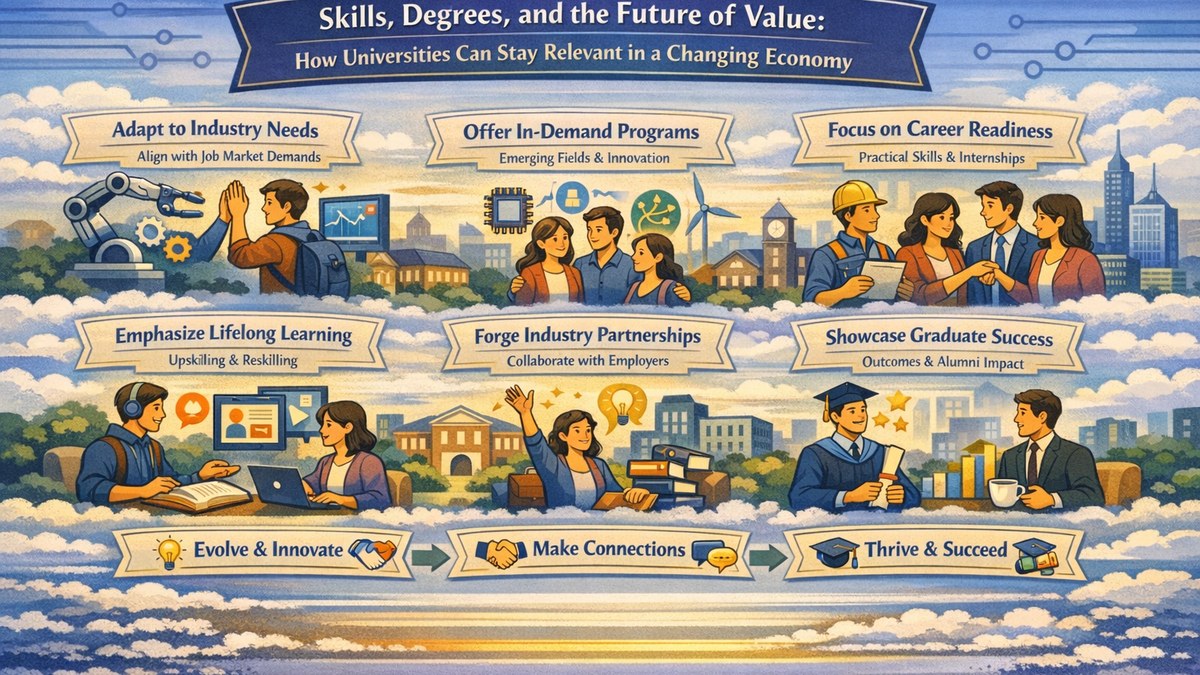
Universities are under growing pressure to show that degrees remain relevant in a labor market defined by technological change, employer uncertainty, and rapidly evolving skill demands. This pressure has intensified because students and families increasingly ask what concrete value higher education delivers. Employers, meanwhile, emphasize communication, adaptability, problem solving, resilience, digital fluency, and the ability to keep learning.
This does not mean universities should reduce themselves to narrow job-training institutions. Higher education has broader purposes: cultivating critical reasoning, research capability, ethical judgment, creativity, and civic participation. The challenge in 2026 is not to choose between deep education and employability, but to connect them more convincingly.
The strongest institutional responses are not simplistic. They combine rigorous disciplinary learning with project-based work, internships, reflective skill articulation, digital fluency, and stronger pathways between study and professional development. Students benefit when they can see how theory informs practice, how intellectual habits translate into capability, and how university learning remains valuable even in unstable economies.
8. Public Trust and Institutional Legitimacy Are More Fragile Than Before
Another major shift in higher education is the growing importance of trust. Universities operate in an environment of stronger public scrutiny, financial pressure, political visibility, and digital transparency. Students and families are more likely to question value, compare options, and evaluate institutional responsiveness in real time. Reputation can therefore no longer be maintained only through historical status. It must be reinforced through performance, clarity, fairness, and credibility.
Trust is shaped by many factors: whether students feel informed, whether institutional systems work predictably, whether qualifications retain meaning, whether technology is adopted responsibly, and whether the university appears genuinely committed to learner development. In 2026, trust is not an abstract ideal. It is a practical institutional asset that affects retention, recruitment, and long-term legitimacy.
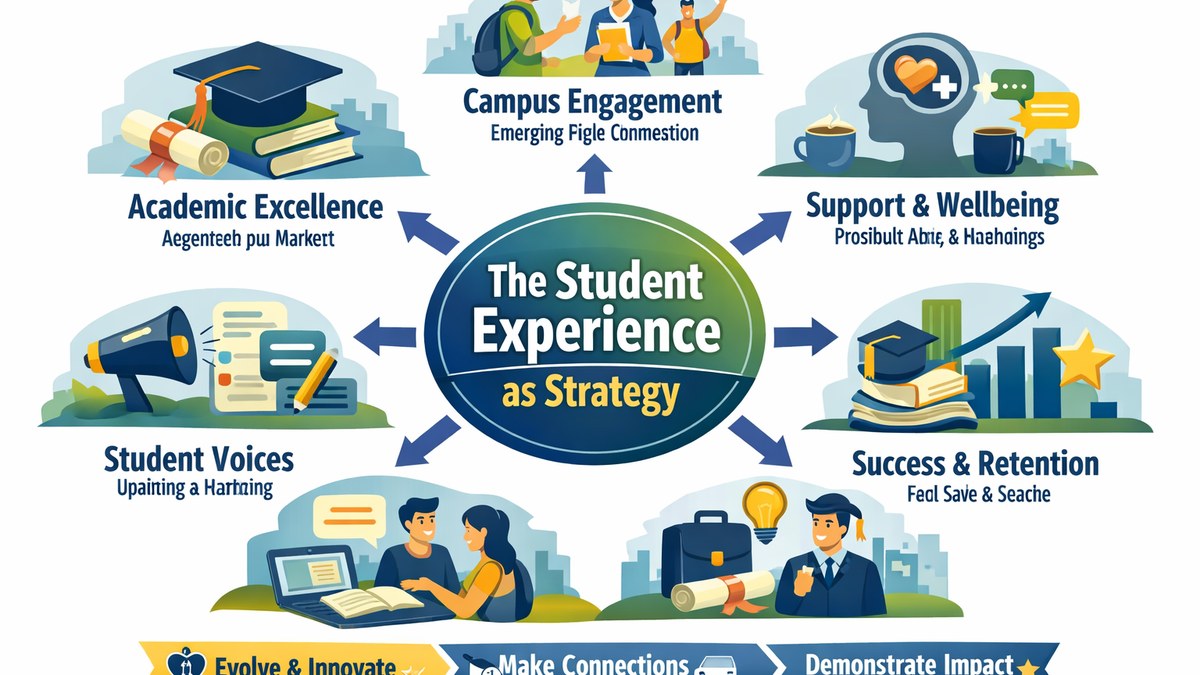
9. The Student Experience Has Become a Strategic Design Question
All of these shifts converge in one larger realization: the student experience is no longer a secondary concern. It is a strategic question. Student experience now includes communication, digital navigation, assessment clarity, belonging, wellbeing support, academic challenge, and access to opportunity. It reflects how the whole institution feels and functions from the learner’s perspective.
Universities that succeed in this environment will not be those that simply accumulate initiatives. They will be those that align systems around student understanding and progression. Clarity, coherence, responsiveness, and support are becoming competitive and educational necessities at the same time.
Conclusion
Higher education in 2026 is being shaped by expansion, completion pressure, AI adoption, digital transformation, wellbeing concerns, mobility debates, skills expectations, and questions of public trust. These forces are not temporary disturbances. They are structural conditions of the contemporary university.
For students, understanding these trends helps explain why their educational environment feels different from even a few years ago. For institutions, the message is more demanding: old models are no longer enough. The most effective universities will be those that respond not with panic or nostalgia, but with integrated strategies rooted in quality, equity, adaptability, and human-centred design.
The future of higher education will not be determined by technology alone, nor by policy language alone. It will be determined by whether institutions can build environments in which more students can enter, belong, learn deeply, complete successfully, and carry credible value from their education into the wider world.
References
- UNESCO. Transforming higher education: a global roadmap for the future, 2026.
- UNESCO IESALC. Higher Education Global Trends Report: Inclusion and equity in an internationally mobile landscape, 2026.
- OECD. Education at a Glance 2025, 2025.
- OECD. Who is expected to complete tertiary education? in Education at a Glance 2025.
- EDUCAUSE. 2025 Students and Technology Report: Shaping the Future of Higher Education Through Technology, Flexibility, and Well-Being, 2025.
- EDUCAUSE. The Impact of AI on Work in Higher Education, 2026.
- World Economic Forum. The Future of Jobs Report 2025, 2025.