FrameMaker Knowledge Hub
• 25 Apr 2026
• 1 views
A scholarly long-form article on why student experience is now a strategic priority for universities, not merely a service-layer concern.
The Student Experience as Strategy: Why Universities Must Design for Clarity, Support, and Trust
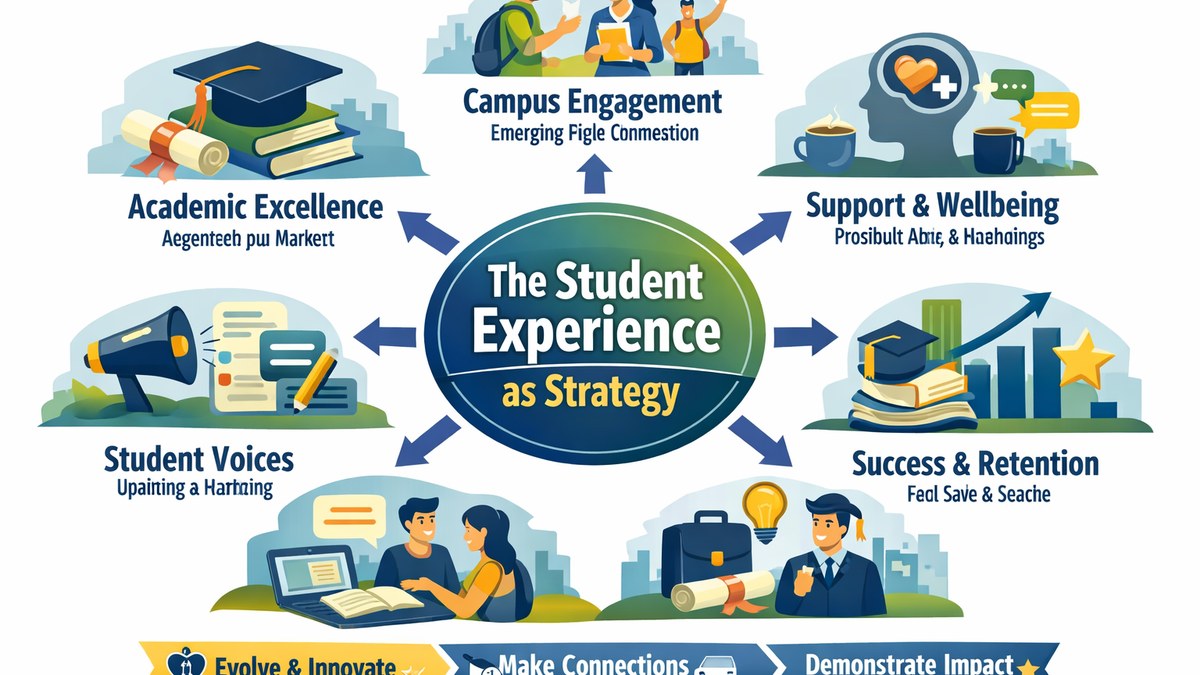
The student experience is no longer a peripheral theme in higher education. It has become one of the central ways universities are judged by students, families, policymakers, and employers. This change reflects a deeper shift in what society expects from higher education. Institutions are no longer evaluated only on curriculum, research output, or prestige. They are increasingly evaluated on whether students can navigate the educational environment clearly, access support when needed, feel that they belong, and trust the institution to act in ways that are intelligible and fair.
This makes the student experience a strategic issue rather than a secondary service matter. It influences retention, completion, reputation, wellbeing, engagement, and the perceived value of a degree. In many cases, it also shapes whether students remain motivated enough to benefit fully from the academic opportunities that universities provide.
Importantly, student experience should not be misunderstood as a purely consumer concept. It is not simply about comfort or satisfaction. At its best, it refers to the total educational environment through which learning becomes possible. That environment includes communication, assessment clarity, digital systems, advising, responsiveness, belonging, and the practical ease with which students can make their way through university life.
Why Student Experience Matters More in 2026
There are several reasons student experience now carries greater strategic weight. First, students enter higher education with rising expectations shaped by wider digital culture. They are accustomed to systems that are searchable, responsive, and transparent. When university systems feel fragmented, repetitive, or difficult to interpret, frustration grows more quickly than it may have in earlier eras.
Second, the diversity of the student body has increased. Students differ in age, location, digital confidence, financial conditions, family obligations, mental-health pressures, commuting patterns, and educational background. A one-size-fits-all institutional model is less likely to work well in such an environment. Experience therefore becomes a question of design: can the institution function clearly and supportively for more than one type of learner?
Third, student experience has become closely linked to measurable outcomes such as retention, progression, and completion. Students who feel confused, invisible, unsupported, or overwhelmed are less likely to remain engaged. Experience is therefore not outside academic success. It is one of the conditions that shape it.
What Student Experience Actually Includes
Student experience is often spoken about vaguely, but it is made up of very concrete components. It includes how clearly students understand institutional expectations, how easily they can use digital systems, how quickly they receive guidance, how approachable faculty and staff seem, whether support services are visible and usable, and whether campus processes feel humane rather than burdensome.
It also includes the classroom environment. Students judge experience partly through teaching design: whether assessment criteria are clear, whether feedback is constructive, whether participation feels possible, and whether they can see a pathway through academic demands. A student may admire a university’s reputation yet still experience everyday educational life as exhausting if systems are unclear or disjointed.
For this reason, universities should resist treating student experience as something that happens only in student affairs offices or event programming. It extends across the whole institution. Every office, platform, classroom, and communication channel contributes to it.
Clarity as an Educational Value
One of the most underrated aspects of student experience is clarity. Students function better when they understand what is expected, where to go, what deadlines matter, how systems operate, and what support is available. Lack of clarity increases friction, anxiety, and disengagement.
Clarity is not about oversimplifying higher education. Universities are complex by nature. But complexity does not need to become confusion. Students should not have to decode basic institutional processes through guesswork or social privilege. Clear communication, predictable procedures, understandable interfaces, and well-explained policies all reduce unnecessary cognitive burden.
This matters especially for students who are new to institutional culture, including first-generation learners, international students, commuters, and those adjusting to digital-heavy systems. Clear design can reduce inequity because it lowers the advantage held by those who already understand how the institution works.
Support Must Be Visible, Not Merely Available
Many universities do in fact offer support services. The problem is often not complete absence, but low visibility, fragmented access, or stigma around use. Advising, writing centres, counseling support, career services, disability services, financial guidance, and peer mentoring may all exist, yet students may not know when to use them, how to access them, or whether they are intended for people like them.
A strong student experience requires that support be legible. Students should encounter repeated, understandable invitations to use help early rather than only in crisis. Support is most effective when it is normalized as part of the learning journey, not framed as remedial weakness.
Institutions also need to consider whether support is coordinated. A student with academic difficulty may also be facing financial stress or housing instability. If support services operate in isolation, students are left to manage complexity when they are least able to do so. Integrated, student-centred design becomes important here.
Digital Experience Is Now Part of Institutional Identity
In 2026, digital experience is inseparable from student experience. Students interact with universities through learning-management systems, portals, registration tools, messaging systems, feedback platforms, and online support channels. If these systems are inconsistent or difficult to navigate, students experience the institution itself as fragmented.
EDUCAUSE’s 2025 work on students and technology emphasizes the importance of flexibility, wellbeing, and the role of digital infrastructure in shaping student perceptions of higher education. This does not mean every digital experience must be frictionless in the commercial sense, but it does mean students notice when systems create avoidable barriers. Multiple logins, unclear menus, poorly timed announcements, and repetitive processes reduce trust.
Well-designed digital systems can do the opposite. They can make support easier to find, reduce confusion, improve planning, and enhance flexibility for students with complex lives. Digital transformation is therefore most meaningful when it improves actual student navigation rather than merely increasing the number of tools in use.
Trust as a Strategic Outcome
Student experience ultimately connects to trust. Students are more likely to engage deeply when they trust that the institution is understandable, fair, and responsive. Trust is shaped through routine interactions. It grows when communications are timely, when policies are applied predictably, when faculty explain expectations well, and when students feel that asking for help will be met with seriousness rather than dismissal.
Trust also affects how students interpret difficulty. In a trusted environment, challenge can feel like part of learning. In a distrusted environment, the same challenge may feel arbitrary or alienating. This difference has major implications for persistence and belonging.
Institutional trust is particularly important in times of rapid change. As universities adopt AI, redesign digital systems, and respond to student diversity, students need confidence that these changes are being made in their interest and with sufficient care. Experience is therefore not just about service quality. It is part of institutional legitimacy.
Why Experience Should Be Designed Strategically
If student experience influences retention, completion, wellbeing, and trust, then it cannot be left to chance. Universities need to design for it deliberately. This means looking at the institution from the student’s perspective and identifying points of unnecessary friction: unclear communication, duplicated processes, inaccessible support, inconsistent expectations, and disconnected systems.
Strategic design does not require reducing education to customer service. Rather, it means acknowledging that learning happens within an environment, and that the environment can either support or undermine student effort. Institutions improve educational quality when they reduce avoidable confusion and strengthen coherent support.
Conclusion
The student experience has become one of the defining strategic questions of higher education. It affects how students learn, whether they persist, how they interpret institutional credibility, and whether the university feels worthy of trust. In a sector shaped by diversity, digital transformation, financial pressure, and rising expectations, experience is not an optional layer. It is part of the educational core.
The universities that succeed in the coming years will be those that understand a simple but demanding truth: clarity, support, and trust are not public-relations extras. They are among the real conditions under which effective higher education becomes possible.
References
- EDUCAUSE. 2025 Students and Technology Report, 2025.
- UNESCO. Transforming higher education: a global roadmap for the future, 2026.
- OECD. Education at a Glance 2025, 2025.