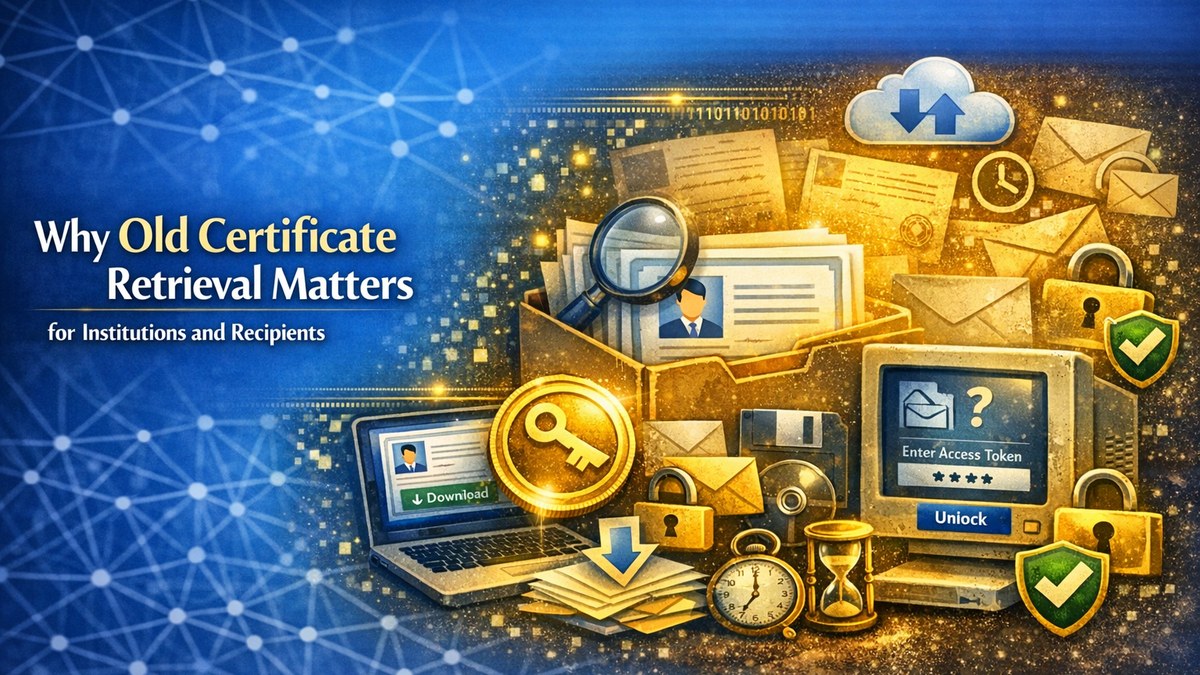
Why Old Certificate Retrieval Matters for Institutions and Recipients
Certificates are not always needed immediately after an event or course ends. In many cases, recipients may need them months or even years later for job applications, academic submissions, promotions, audits, or personal record keeping. This is why old certificate retrieval is an important part of a strong digital credential system.
When institutions fail to provide long-term access, certificate requests often return as repeated support issues. A better retrieval model improves both user convenience and administrative efficiency.
Why Long-Term Access Is Important
Recipients do not always store certificates perfectly. Emails get lost, devices change, and downloaded files may be misplaced. When that happens, the institution becomes the fallback source. If certificate records are not organized for retrieval, staff must search through archives manually or regenerate credentials case by case.
This is inefficient and frustrating for both sides.
Benefits of Old Certificate Retrieval Support
1. Better Recipient Confidence
Participants feel more secure when they know their certificate can be accessed again later if needed.
2. Reduced Administrative Burden
Self-service retrieval reduces repeated duplicate requests sent to event teams or institutional staff.
3. Stronger Institutional Professionalism
Long-term access reflects better record management and more reliable credential handling.
4. Better Usefulness of the Credential
A certificate remains valuable only if the recipient can still access it when it matters most.
What Makes Retrieval Effective
A good retrieval model usually depends on structured event records, participant mapping, secure access, and a stable certificate delivery workflow. Retrieval should be easy enough for the rightful recipient, but controlled enough to prevent misuse.
Why This Matters More Over Time
The longer an institution or event platform operates, the more certificate history it accumulates. Without proper retrieval support, old certificates become operational clutter. With a reliable retrieval system, historical records become a service asset instead of a support burden.
Conclusion
Old certificate retrieval is not just a convenience feature. It is a core part of dependable digital credential management. It helps recipients preserve access to important records and helps institutions reduce repetitive support work while maintaining a more professional certificate ecosystem.